The chain reaction: how one change ripples through every trade
On a real project the trades depend on each other, so one design change resizes everything after it.
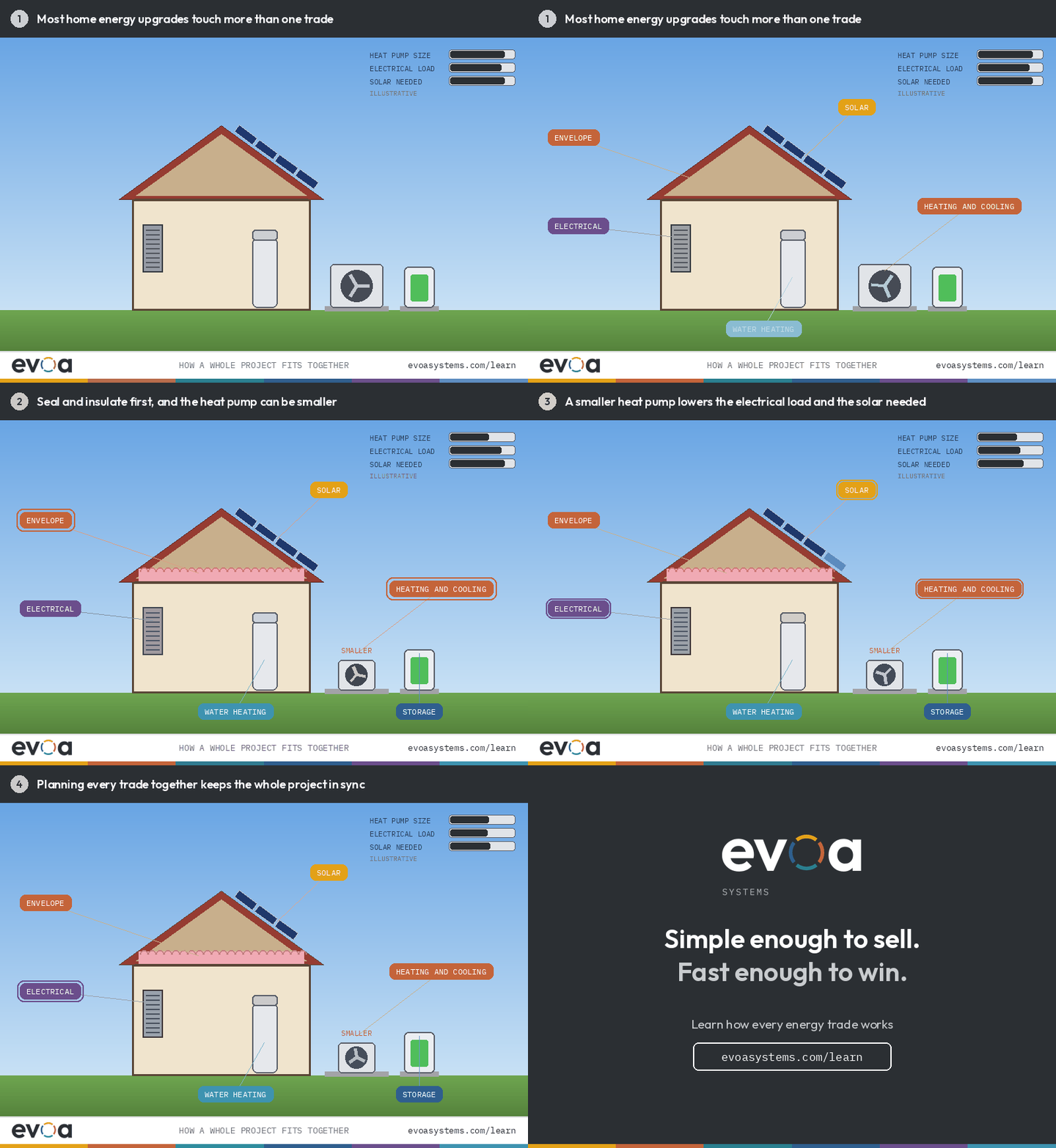
Steps in this animation
- 1. The leaky house. A house that leaks heat needs 49,700 BTU/h to stay warm on a cold day. Sample values, illustrative.
- 2. Insulation and air sealing. Insulation and air sealing slow the escape of heat, so the same house now needs 29,500 BTU/h. Sample values, illustrative.
- 3. Smaller heat pump. A smaller load means a smaller heat pump, in this example 2.5 tons instead of a larger unit. Sample values, illustrative.
- 4. Shorter ground loop. Less heating capacity needs less ground, so the loop drops to 4 bores at 150 ft. Sample values, illustrative.
- 5. Smaller solar array. The house also draws less power, so the array resizes to 20 panels at 430 W, or 8.6 kW. Sample values, illustrative.
- 6. Payback card. The payback card updates, because the project cost and the running cost both moved.
Most people plan an energy upgrade one item at a time. Add insulation. Replace the old furnace. Put panels on the roof. On a real project those choices are not separate. Each one changes the size, the cost and the schedule of the ones that follow.
How it works
Start with a house that leaks heat. A load calculation adds up everything the building loses through the attic, the walls, the windows and the air that slips in around openings. The result is a heating load, the amount of heat the building needs on a cold day. In the walk through above it comes to 49,700 BTU/h. That figure is a sample value, shown only to make the idea visible.
Now tighten the shell. Insulation slows heat moving through the walls and the roof, and air sealing closes the gaps that let warm air escape. Run the same calculation again and the load falls to 29,500 BTU/h, another sample value. Nothing about the heating equipment or the solar array changed. Only the building changed.
The load sets equipment size. A smaller load means a smaller heat pump, in this example 2.5 tons instead of a larger unit. A smaller heat pump needs less ground, so the design drops to 4 bores at 150 ft. A tighter house also draws less electricity, so the solar array resizes to 20 panels at 430 W, or 8.6 kW. Those numbers are sample values too.
Every one of those changes moves money. The payback card at the end of the walk through updates, because the project cost and the running cost both moved. The point is not the exact figures. The point is that one decision at the start reaches every trade at the end.
Key terms
Heating load: the amount of heat a building needs to stay warm on a cold day, usually written in BTU/h.
BTU/h: British thermal units per hour, a way to measure how fast heat moves.
Ton: a unit of heating and cooling capacity. One ton is about 12,000 BTU/h.
Bore: a vertical hole drilled for a geothermal ground loop.
Air sealing: closing the gaps and cracks that let air move in and out of a building.
Sample values: numbers used to show how a method works. They are not a quote or a promise for any particular home.
Where it fits in a project
The chain reaction is the reason the order of work matters. The shell comes first, because it changes the load. The load comes next, because it sizes the heat pump. The heat pump and the load together size the ground loop and the solar array. When each trade works from its own assumptions, the numbers drift apart and somebody has to redo the work. When they share one model, a change in one place shows up everywhere it matters.
Filed under Whole Project explainers in the Learn hub.
Questions
Designing this for a client? Evoa Systems puts every trade in one proposal.
Get early accessRelated explainers
How solar works on a project
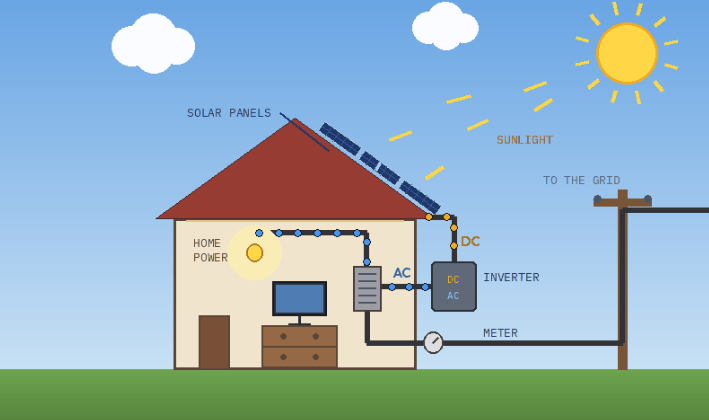
How sunlight becomes usable electricity on a real job, and what decides the size of an array.
How a heat pump heats and cools a home
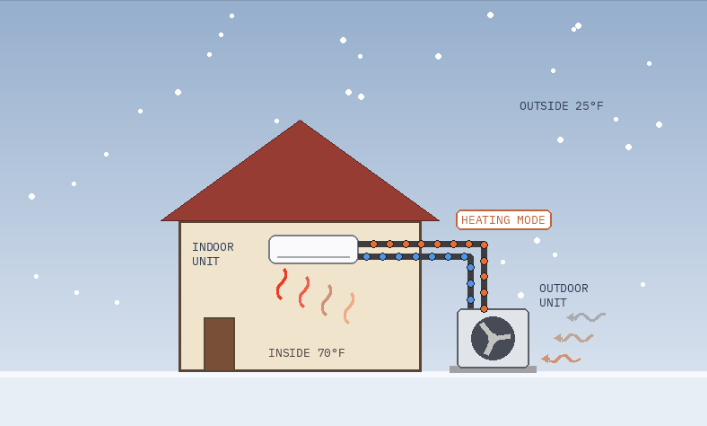
A heat pump moves heat instead of making it, pulling heat from outdoor air in winter and pushing it outside in summer.
How geothermal ground loops work
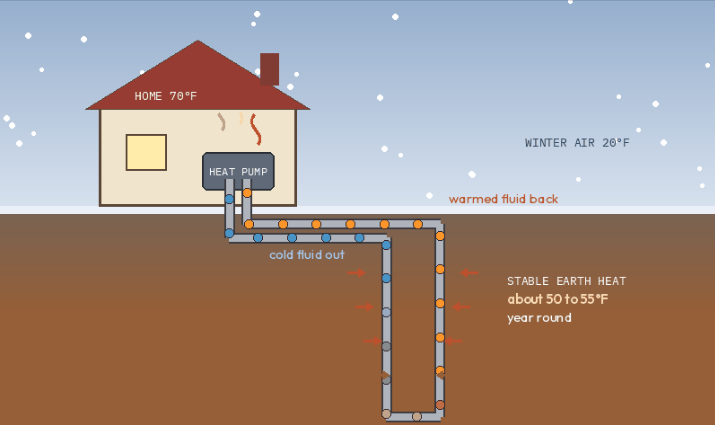
A loop of pipe in the ground feeds a heat pump, and the ground temperature does most of the work.