How a heat pump heats and cools a home
A heat pump moves heat instead of making it, pulling heat from outdoor air in winter and pushing it outside in summer.
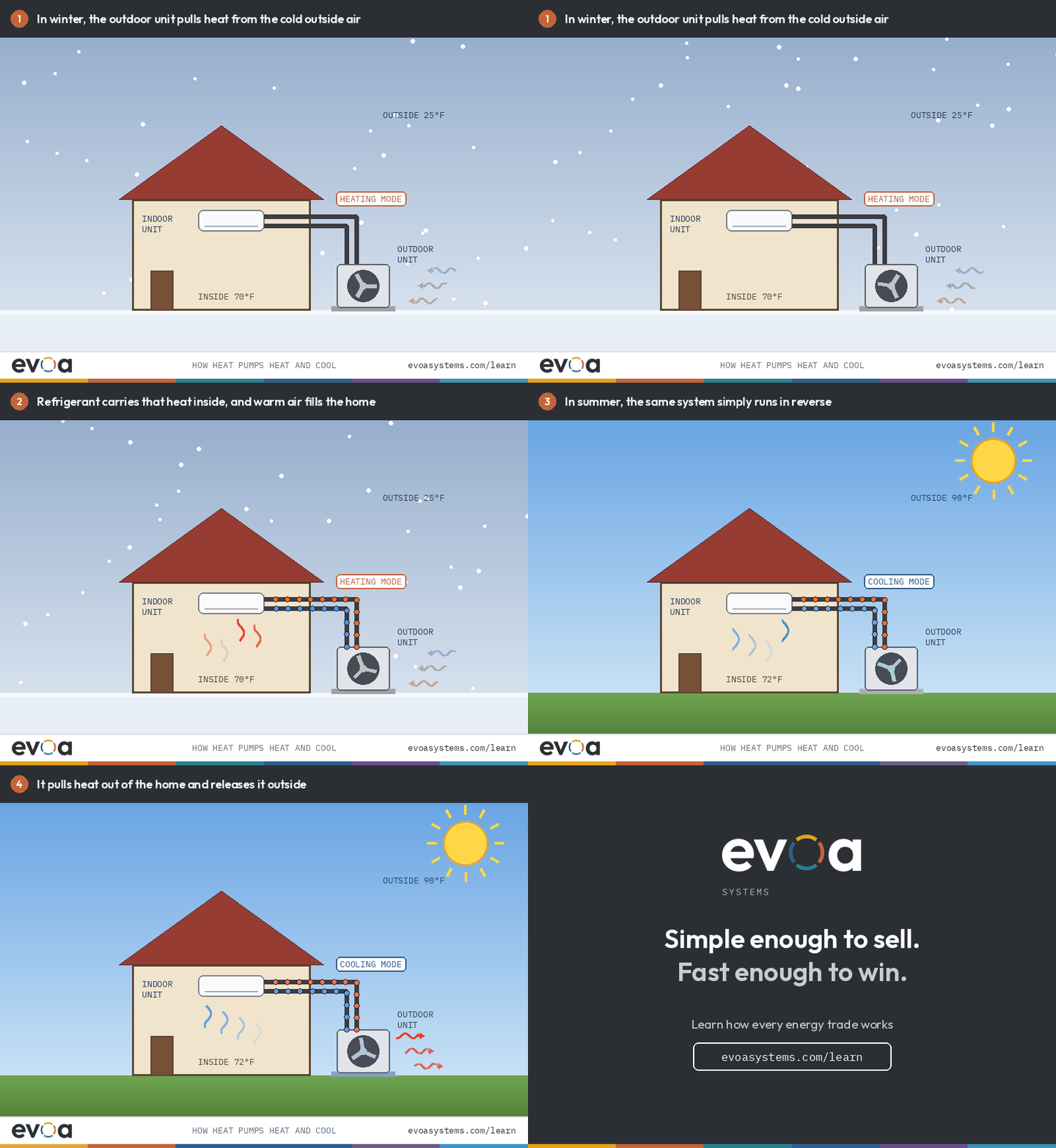
Steps in this animation
- 1. Outdoor coil, heating mode. Cold refrigerant arrives at the outdoor coil. The outside air is warmer than the refrigerant, so heat moves from the air into the fluid.
- 2. The compressor squeezes it. The compressor raises the pressure of the refrigerant, and that raises its temperature. The heat came from outside, and the compressor concentrated it.
- 3. Indoor coil releases the heat. The hot refrigerant travels to the indoor coil, where air from the house passes over it and carries the heat into the rooms.
- 4. The expansion valve drops the pressure. The expansion valve lets the pressure down, so the refrigerant cools again and can absorb more heat outside.
- 5. The reversing valve flips the flow. In summer the reversing valve sends the refrigerant the other way, and the same loop cools the home instead of heating it.
A heat pump does not burn fuel to make heat. It moves heat from one place to another. That is why the same equipment can warm a house in winter and cool it in summer.
How it works
Inside a heat pump is a loop of refrigerant, a fluid that changes between liquid and gas as its pressure changes. The loop has four main parts: an outdoor coil, a compressor, an indoor coil and an expansion valve.
In heating mode the refrigerant arrives at the outdoor coil cold and at low pressure. Outside air is warmer than the refrigerant, even on a chilly day, so heat moves from the air into the fluid. The refrigerant absorbs that heat and turns into a gas.
Next the compressor squeezes the gas. Squeezing raises both its pressure and its temperature, so the refrigerant leaves the compressor hot. That is the trick of the whole machine. The heat came from outside, and the compressor concentrated it.
The hot refrigerant travels indoors to the indoor coil. Air from the house passes over that coil, picks up the heat and carries it through the ducts or the indoor unit into the rooms. As the refrigerant gives up its heat, it cools and turns back into a liquid.
Finally the expansion valve lets the pressure drop. The refrigerant cools further and returns to the outdoor coil, ready to absorb heat again. The loop repeats.
In summer a reversing valve flips the direction of the flow. Now the outdoor coil releases heat into the outside air and the indoor coil absorbs heat from the house. The same parts cool the home instead of heating it.
Key terms
Refrigerant: the fluid inside the loop that carries heat by changing between liquid and gas.
Compressor: the part that raises the pressure and the temperature of the refrigerant.
Coil: the part where heat moves between the refrigerant and the air.
Expansion valve: the part that drops the pressure so the refrigerant can absorb heat again.
Reversing valve: the part that switches the loop between heating and cooling.
Tonnage: a measure of capacity. One ton is about 12,000 BTU/h.
Where it fits in a project
A heat pump should be sized from the building, not from a rule of thumb. Insulation, windows and air sealing set the load, and the load sets the equipment. A unit that is too large cycles on and off, and a unit that is too small cannot hold the temperature on the coldest day. The heat pump also changes the electrical service and the power the house draws, which affects any solar or battery that comes later.
Filed under Heating and Cooling explainers in the Learn hub.
Questions
Designing this for a client? Evoa Systems puts every trade in one proposal.
Get early accessRelated explainers
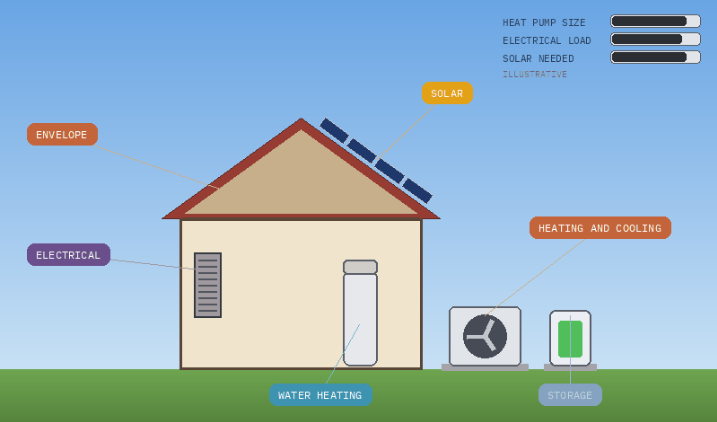
The chain reaction: how one change ripples through every trade
On a real project the trades depend on each other, so one design change resizes everything after it.
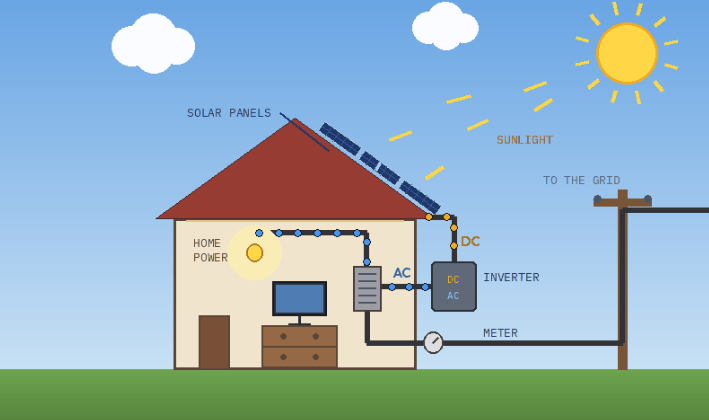
How solar works on a project
How sunlight becomes usable electricity on a real job, and what decides the size of an array.
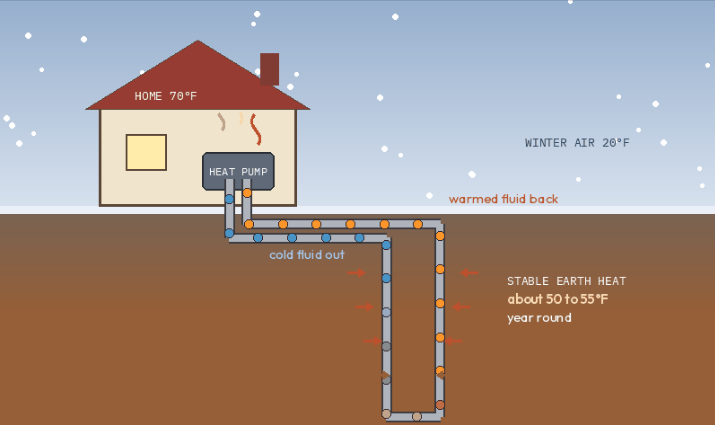
How geothermal ground loops work
A loop of pipe in the ground feeds a heat pump, and the ground temperature does most of the work.