How solar works on a project
How sunlight becomes usable electricity on a real job, and what decides the size of an array.
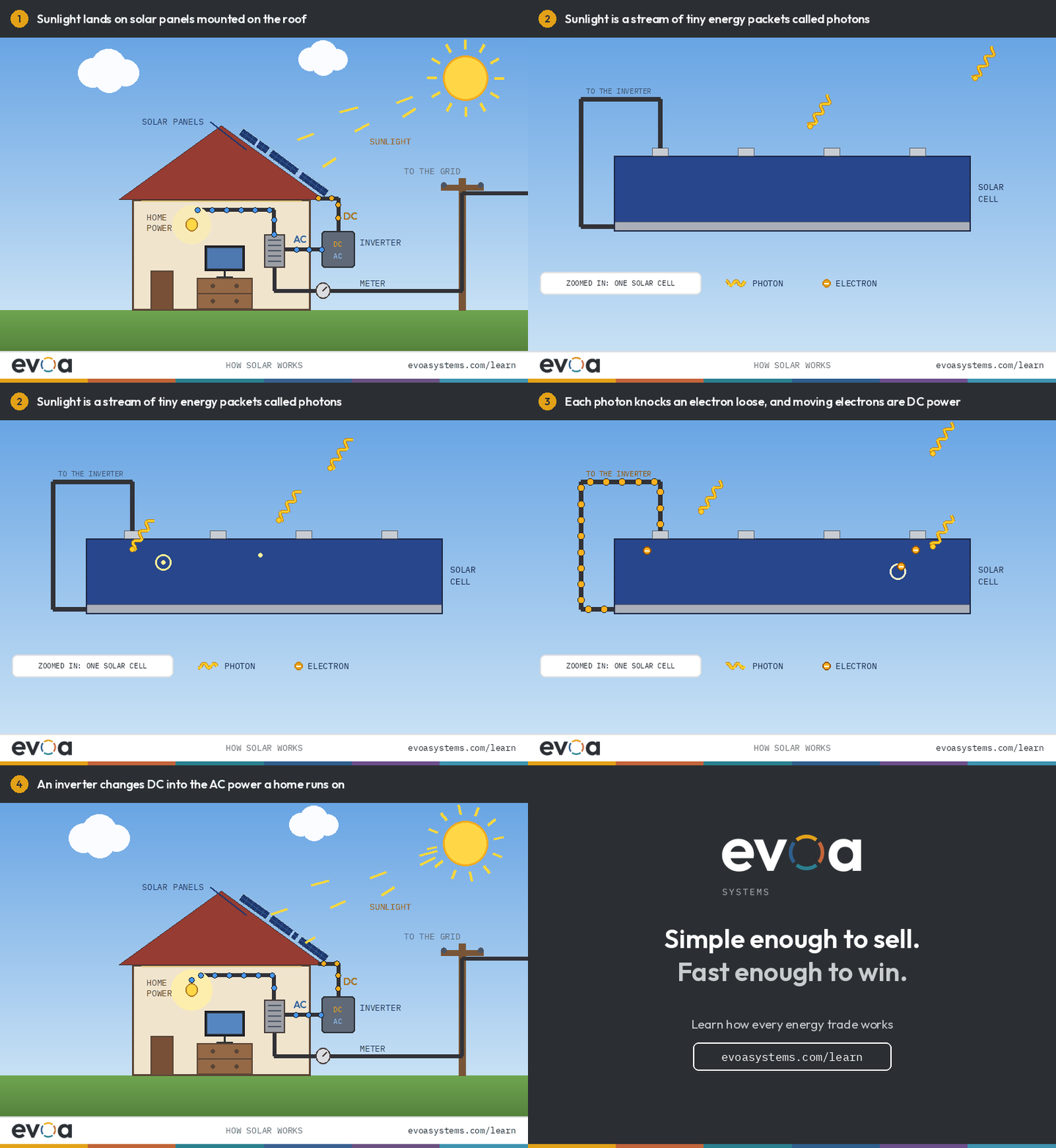
Steps in this animation
- 1. Sunlight. Sunlight reaches the roof. Roof angle, shading and local weather set how much energy the array can collect.
- 2. Array. Panels turn sunlight into direct current. The array size follows the roof space and the building load.
- 3. Inverter. The inverter changes direct current into the alternating current a building and the grid use.
- 4. Meter and grid. The meter records what the building uses and what flows out to the grid.
Solar is often the first trade a client asks about, and it is the trade that depends most on everything else on the job. The array is sized against a building load that the other trades set.
How it works
Sunlight lands on the roof. The angle of the roof, shading from trees or chimneys and local weather decide how much energy reaches the panels. Panels turn that light into direct current. An inverter changes the direct current into the alternating current a building and the grid use. A meter records what the building consumes and what flows to or from the grid.
The array is sized against the building load, not against the roof alone. A house that cuts its load with envelope work and a heat pump needs a smaller array for the same result. In an Evoa Systems project that change moves through the design on its own.
Key terms
- Kilowatt is the size of the array at one moment.
- Kilowatt hour is the energy it produces over time.
- Offset is the share of the building load the array covers.
- Inverter is the equipment that converts direct current into alternating current.
Where it fits in a project
Solar usually comes after the envelope and the heating and cooling equipment are chosen, because those two decide the load. Storage is often sized with the array, since a battery changes when the solar energy gets used. Cost, incentives and payback all land in the same proposal as the rest of the trades.
Filed under Solar explainers in the Learn hub.
Questions
Designing this for a client? Evoa Systems puts every trade in one proposal.
Get early accessRelated explainers
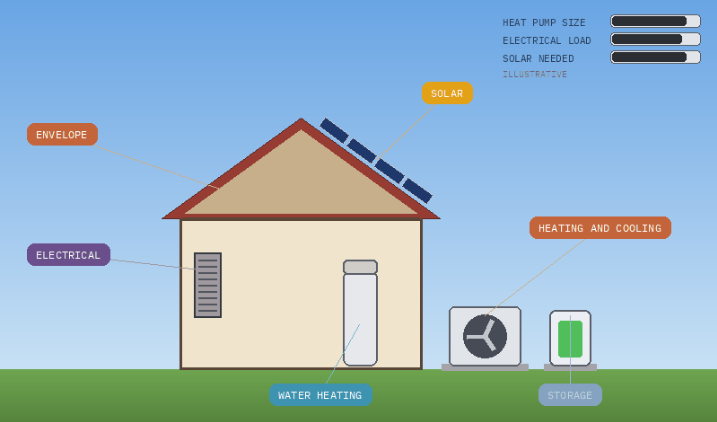
The chain reaction: how one change ripples through every trade
On a real project the trades depend on each other, so one design change resizes everything after it.
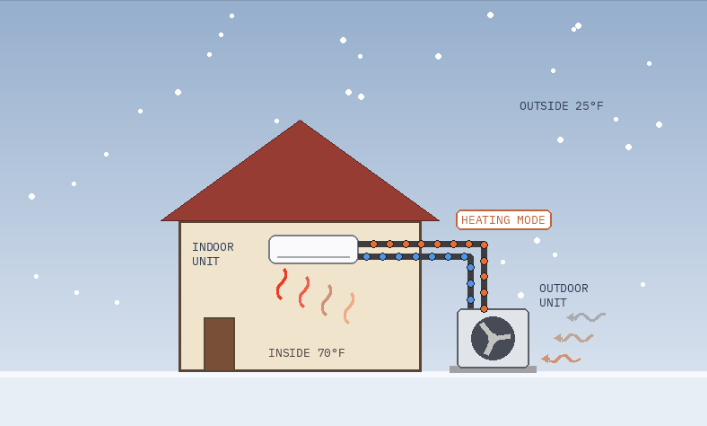
How a heat pump heats and cools a home
A heat pump moves heat instead of making it, pulling heat from outdoor air in winter and pushing it outside in summer.
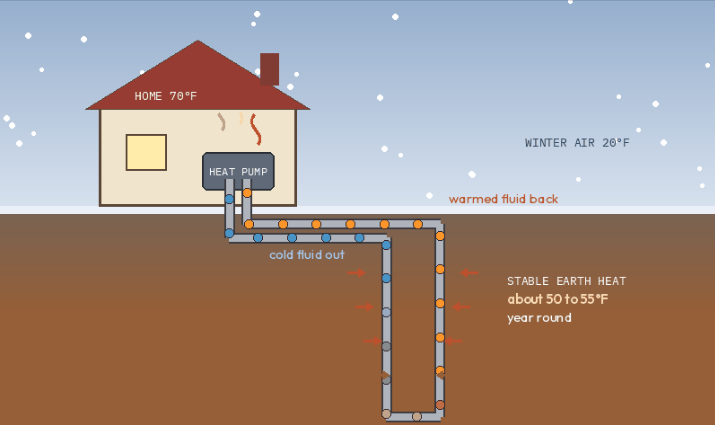
How geothermal ground loops work
A loop of pipe in the ground feeds a heat pump, and the ground temperature does most of the work.